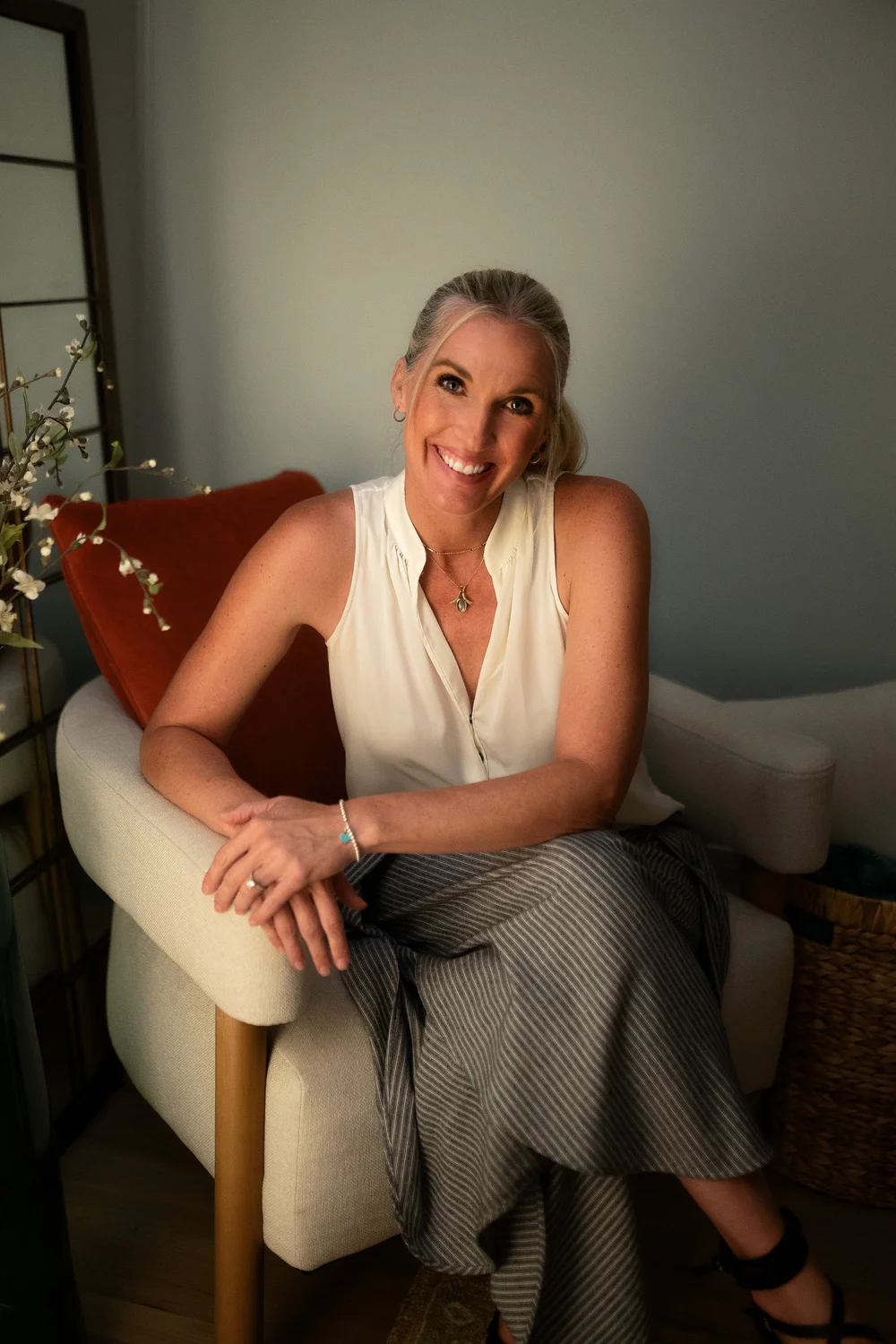
My story
It started with my own body.
For years, I carried tension that no one could fully explain. I'd been to doctors, chiropractors, physical therapists — all skilled people who helped in real ways. But there was a layer they weren't quite reaching. Something held in tissue and nervous system that went deeper than structure. I started to suspect that what my body was holding had roots not just in posture or overuse, but in experience.
When I found somatic bodywork, something shifted. Not dramatically — this work rarely announces itself. But session by session, I started to feel something unfurl. Places that had been braced for years began to soften. I slept better. I moved more easily. I felt more like myself.
That was when I knew I wanted to learn to do this for other people.
"I got into this work because I needed it. I stay in it because I keep watching it do things nothing else has been able to do."
I trained at the Utah College of Massage Therapy, and then kept going — adding Craniosacral Therapy, trauma-informed bodywork, and eventually completing foundational training in Somatic Experiencing®, the nervous-system-based approach developed by Dr. Peter Levine. Each of these threads added something the others didn't have. Together, they form the way I work.
The body as guide
I believe the body is always telling the truth.
The tension you carry in your shoulders, the way you brace before someone touches you, the ache that flares when you're stressed — these aren't failures of your body. They're messages. Your nervous system responding, adapting, protecting. Often very wisely, to things that happened a long time ago.
What I do in a session is listen to those messages alongside you. Through touch, through slowing down, through paying careful attention to what's present in tissue and breath and the subtle rhythms of the nervous system, I try to create conditions where the body can begin to release what it no longer needs to hold.
This isn't about forcing anything. I'm not trying to fix you — you're not broken. I'm offering a quality of attention and contact that most people rarely receive, and letting the body do what it already knows how to do.
"Your body isn't the problem to be solved. It's the intelligence we're working with."
Sometimes this means very slow, hands-on work with the craniosacral system — following subtle rhythms of cerebrospinal fluid, working with restrictions in the connective tissue around the brain and spinal cord. Sometimes it means more traditional massage, but with a different quality of presence — tracking the nervous system's response throughout, pausing when something needs space, asking rather than assuming.
And sometimes it means sitting with you for a moment when something unexpected comes up. When a spot of tension holds a memory. When the body finally lets go of something it's been guarding for years. Those moments aren't unusual in this work. They're often the whole point.
My practice
A small practice, by intention.
I work with a limited number of clients each week. This isn't incidental — it's a deliberate choice. This work requires me to be fully present with each person, and I can only do that well when I'm not overextended. A smaller practice means I can give each session the attention it deserves.
Most of my clients come regularly — monthly, or more often when we're in the middle of something. Over time, that relationship becomes one of the most valuable parts of the work. I know your body. I notice what's shifted. I can track changes that wouldn't be visible in a single session.
I work out of a quiet, private studio in Salt Lake City. Sessions are by appointment, Tuesday through Saturday. I don't double-book, I don't rush transitions, and I build in time between clients so I can be genuinely present — not halfway thinking about the next person — when you're on the table.
If you've been searching for something you haven't quite found yet — if the standard approaches have helped some but haven't gotten to the root — I'd like to talk. Start with a 60-minute session and we'll see what your body has to say.